01
Step One
Know the Difference Between You and Your Name
The first step is purely conceptual but it is the most important. You must understand that JOHN HENRY SMITH is not you. It is a corporate fiction, a legal construct, a vessel. You are John Henry Smith — a living man, a flesh and blood being, a sovereign under natural law. These are two entirely different entities, subject to two entirely different jurisdictions.
Study the difference between statutory law (which applies to the fiction) and common law (which applies to the living man). Every time you unconsciously identify with the ALL CAPS name, you are volunteering yourself into a jurisdiction you have the right to decline.
▶ Action: Stop referring to yourself by your ALL CAPS name. Begin to say "I am a man" or "I am a woman" — not "I am JOHN SMITH."
02
Step Two
Rebut the Cestui Que Vie Presumption
Under the Cestui Que Vie Act, you are presumed dead until you prove you are alive. This sounds absurd — and it is — but it is the legal reality. The act allows the state to administer your estate (your name, your labor, your property) on your behalf until you "return from the sea" and make yourself known as a living being.
A Notice of Rebuttal — also called an Affidavit of Life — is a formal legal document in which you declare that you are a living man or woman, that you are not a legal fiction, that you are the beneficiary of the Cestui Que Vie trust (not the trustee), and that you do not consent to the state's administration of your estate.
▶ Action: Research "Affidavit of Life" and "Notice of Rebuttal of Cestui Que Vie." Consult with a common law practitioner before filing anything.
03
Step Three
Understand Consent and Contracts
Every interaction with the state is a contract. Your driver's license is a contract. Your bank account is a contract. Your tax return is a contract. When you sign anything with your ALL CAPS name, you are contracting as the legal fiction — you are operating in admiralty jurisdiction, on the sea of commerce.
You cannot be compelled to enter a contract without full disclosure of its terms. The government never disclosed to you that your birth certificate was a bond, that your name was a legal fiction, or that by using that name you were volunteering into a corporate jurisdiction. Lack of disclosure = lack of valid consent = voidable contracts.
▶ Action: Begin to qualify your signatures. When you must sign, add "without prejudice" or "under duress" above your signature to preserve your rights.
04
Step Four
Study Common Law and Natural Law
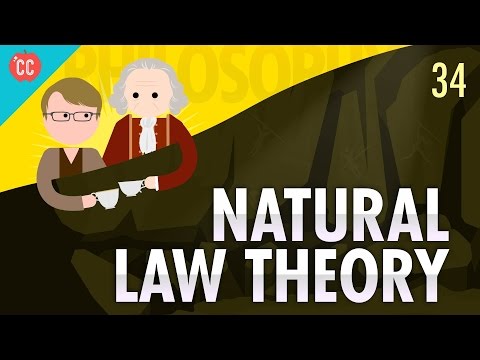
Common law — also called natural law — is the law of the land. It predates statutory law, admiralty law, and corporate law. Under common law, you are innocent until proven guilty. You have the right to a trial by jury of your peers. You cannot be fined or imprisoned for a victimless "crime." You cannot be compelled to pay for the privilege of existing.
Common law says: Do not harm another person. Do not damage another person's property. Do not use fraud or deceit in your dealings. If you live by these three principles, you have committed no crime — regardless of what statute says. Statutes are rules for the corporate fiction. They do not bind the living man or woman who has not consented.
▶ Action: Study the works of Karl Lentz, Dean Clifford, and other common law educators. Watch the videos on this site. Knowledge is the foundation.
05
Step Five
Reclaim Your Spiritual Sovereignty
Beyond the legal system, there is the spiritual claim. The Vatican's Unam Sanctam claimed your soul at birth. But a claim is not ownership — it is a presumption. Just as you can rebut the legal presumption of death, you can rebut the spiritual presumption of submission to papal authority.
This does not require any particular religion or belief system. It simply requires you to assert, consciously and intentionally, that your soul belongs to you — that you do not consent to any ecclesiastical, spiritual, or legal claim upon it made without your knowledge and without your consent. Declare your sovereignty. Mean it. Live it.
▶ Action: Begin with intention. Declare internally and externally: "My soul is my own. I do not consent to any claim upon it made without my knowledge and consent."
!
Important Warning
Knowledge First. Action Second.
This information is for educational purposes. The legal system is complex and the journey to sovereignty is not simple. Taking legal action based on incomplete understanding can cause more harm than good. People have gone to prison making the right arguments in the wrong way.
The goal of this page is to give you the foundational understanding that will change how you see every legal interaction for the rest of your life. Use that understanding wisely. Build knowledge. Find community. Then, when you are ready, take informed, grounded action.
⚠ Always consult with a qualified common law practitioner before making any legal filings or declarations.